GRINDER TALK · THE RULE
Your espresso machine has been blamed for crimes it did not commit. The grinder was at the scene the whole time, holding a bag of dust.
Here is how it usually goes. The shot runs fast and sour. Or it chokes and tastes like a burnt tire. You open a browser tab and start pricing a nicer machine. Close the tab. Look at the grinder first.
That’s not a hunch. It’s what the machine makers say in their own manuals, which almost nobody reads, which is why we read them for you.
What the manuals actually say
Breville’s Bambino Plus booklet is blunt about it. If the grind is too fine, “the water will not flow through the coffee even when under pressure,” and the shot comes out over-extracted, dark, and bitter. Too coarse, and the water runs through too quickly. Under-extracted. Thin. Sad.
The same booklet says espresso should start to flow after about 8 to 12 seconds. If it starts in under 7, you’ve either under-dosed the basket or the grind is too coarse. Note what’s not on that list: “buy a new machine.”
Gaggia says the same thing in Italian-flavored English. The Classic Pro manual’s troubleshooting table has a line for coffee that brews too fast (under 20 seconds). The first thing to check: that the coffee “has not been ground too coarsely.” Two brands. Two price points. Same first suspect.
Pressure is not the variable you think it is
Both the Bambino Plus and the Gaggia Classic Pro (E24) extract at 9 bar. Breville lists a 15 bar pump feeding a 9 bar extraction. Gaggia lists a 15 bar pump with the pressure valve calibrated to 9 bar. The machine pushes water at a set pressure. The bed of coffee decides how fast that water gets through.
And the bed of coffee is built by the grinder. Particle size sets resistance. Resistance sets flow. Flow sets taste. A nicer machine pushes the same water into the same bad puck. It just does it in brushed stainless.
The machine supplies pressure. The grinder supplies resistance. Only one of those has a dial you can turn.
The tell: you’re living on the training-wheels basket
Most starter machines ship with two kinds of filter baskets. Breville calls them single wall and dual wall. The dual wall basket is for pre-ground coffee and older beans. In Breville’s words, it regulates the pressure to help the extraction “regardless of the grind, dose and tamp pressure or freshness.”
That’s a useful crutch. It is also a crutch. Gaggia ships something similar, the “crema perfetta” filter, and says its traditional basket calls for “manual skills and experience.” If you’re stuck on the pressurized basket because your grinder can’t go fine enough for the regular one, a new machine won’t fix that. It’ll come with the same pressurized basket in the box.
What “good enough” looks like
You don’t need a grinder that costs more than your car payment. You need one that reaches true espresso fineness and moves in small steps once it’s there. Espresso punishes big jumps between settings.
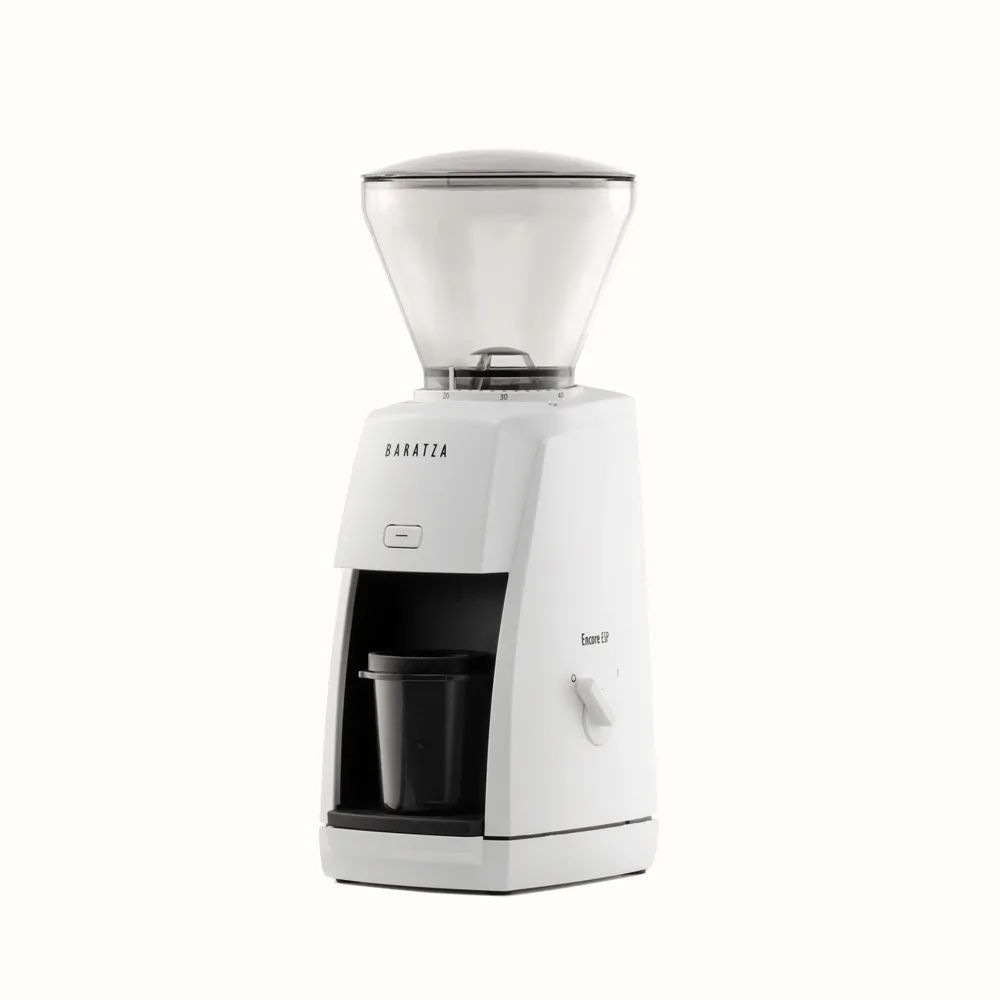
The Baratza Encore ESP is a clean example of the idea. Baratza splits its 40 settings in half. Settings 1 to 20 are the espresso range, where each click changes the grind “by small amounts.” Settings 21 to 40 take bigger jumps for filter coffee. The manual suggests starting around 15 for an 18 g dose of medium roast. It sits in the roughly $150–250 band. Check current price.
CoffeeReview, looking at a batch of mid-range burr grinders, put it plainly: some can be used for espresso, but “a specialized espresso grinder is generally best for that demanding method.” We agree. Based on specs, owner reports, and price, an espresso-first grinder is the most useful money you’ll spend on this hobby.
When it really is the machine
Fair is fair. Sometimes the machine is guilty. Breville’s troubleshooting table lists “machine needs to be descaled” as a cause when water won’t flow from the group head or there’s no steam. Coffee leaking around the portafilter usually means grounds on the basket rim or a portafilter not locked in properly. That’s a machine-side problem, but it’s not a buy-a-new-machine problem either.
So the order of suspects goes like this:
- Grind size and dose first. Change one thing at a time.
- Bean age second. Breville suggests beans 5 to 20 days past the roast date.
- Scale third. Descale per the manual. Our maintenance hub has the boring details.
- The machine itself last. Way last.
We may earn a commission if you buy through our links, at no extra cost to you. How that works.
Basis: manufacturer specs and manuals, the references linked below, and price. We have not run this gear through our own testing, and we won’t pretend otherwise.
Sources
- Breville: Bambino Plus instruction booklet (PDF)
- Breville: Bambino Plus product page
- Gaggia: Classic Pro operating instructions, US (PDF)
- Gaggia North America: Classic Pro E24 product page
- Baratza: Encore ESP product page
- Baratza: Encore ESP operations manual (PDF)
- CoffeeReview: Mid-range burr grinder equipment report (2020)
Leave a Reply