Category: Grinder Talk

  • Your espresso machine is not the problem. Your grinder is.

    GRINDER TALK · THE RULE

    Your espresso machine has been blamed for crimes it did not commit. The grinder was at the scene the whole time, holding a bag of dust.

    Here is how it usually goes. The shot runs fast and sour. Or it chokes and tastes like a burnt tire. You open a browser tab and start pricing a nicer machine. Close the tab. Look at the grinder first.

    That’s not a hunch. It’s what the machine makers say in their own manuals, which almost nobody reads, which is why we read them for you.

    What the manuals actually say

    Breville’s Bambino Plus booklet is blunt about it. If the grind is too fine, “the water will not flow through the coffee even when under pressure,” and the shot comes out over-extracted, dark, and bitter. Too coarse, and the water runs through too quickly. Under-extracted. Thin. Sad.

    The same booklet says espresso should start to flow after about 8 to 12 seconds. If it starts in under 7, you’ve either under-dosed the basket or the grind is too coarse. Note what’s not on that list: “buy a new machine.”

    Gaggia says the same thing in Italian-flavored English. The Classic Pro manual’s troubleshooting table has a line for coffee that brews too fast (under 20 seconds). The first thing to check: that the coffee “has not been ground too coarsely.” Two brands. Two price points. Same first suspect.

    Pressure is not the variable you think it is

    Both the Bambino Plus and the Gaggia Classic Pro (E24) extract at 9 bar. Breville lists a 15 bar pump feeding a 9 bar extraction. Gaggia lists a 15 bar pump with the pressure valve calibrated to 9 bar. The machine pushes water at a set pressure. The bed of coffee decides how fast that water gets through.

    And the bed of coffee is built by the grinder. Particle size sets resistance. Resistance sets flow. Flow sets taste. A nicer machine pushes the same water into the same bad puck. It just does it in brushed stainless.

    The machine supplies pressure. The grinder supplies resistance. Only one of those has a dial you can turn.

    The tell: you’re living on the training-wheels basket

    Most starter machines ship with two kinds of filter baskets. Breville calls them single wall and dual wall. The dual wall basket is for pre-ground coffee and older beans. In Breville’s words, it regulates the pressure to help the extraction “regardless of the grind, dose and tamp pressure or freshness.”

    That’s a useful crutch. It is also a crutch. Gaggia ships something similar, the “crema perfetta” filter, and says its traditional basket calls for “manual skills and experience.” If you’re stuck on the pressurized basket because your grinder can’t go fine enough for the regular one, a new machine won’t fix that. It’ll come with the same pressurized basket in the box.

    What “good enough” looks like

    You don’t need a grinder that costs more than your car payment. You need one that reaches true espresso fineness and moves in small steps once it’s there. Espresso punishes big jumps between settings.

    The Baratza Encore ESP is a clean example of the idea. Baratza splits its 40 settings in half. Settings 1 to 20 are the espresso range, where each click changes the grind “by small amounts.” Settings 21 to 40 take bigger jumps for filter coffee. The manual suggests starting around 15 for an 18 g dose of medium roast. It sits in the roughly $150–250 band. Check current price.

    CoffeeReview, looking at a batch of mid-range burr grinders, put it plainly: some can be used for espresso, but “a specialized espresso grinder is generally best for that demanding method.” We agree. Based on specs, owner reports, and price, an espresso-first grinder is the most useful money you’ll spend on this hobby.
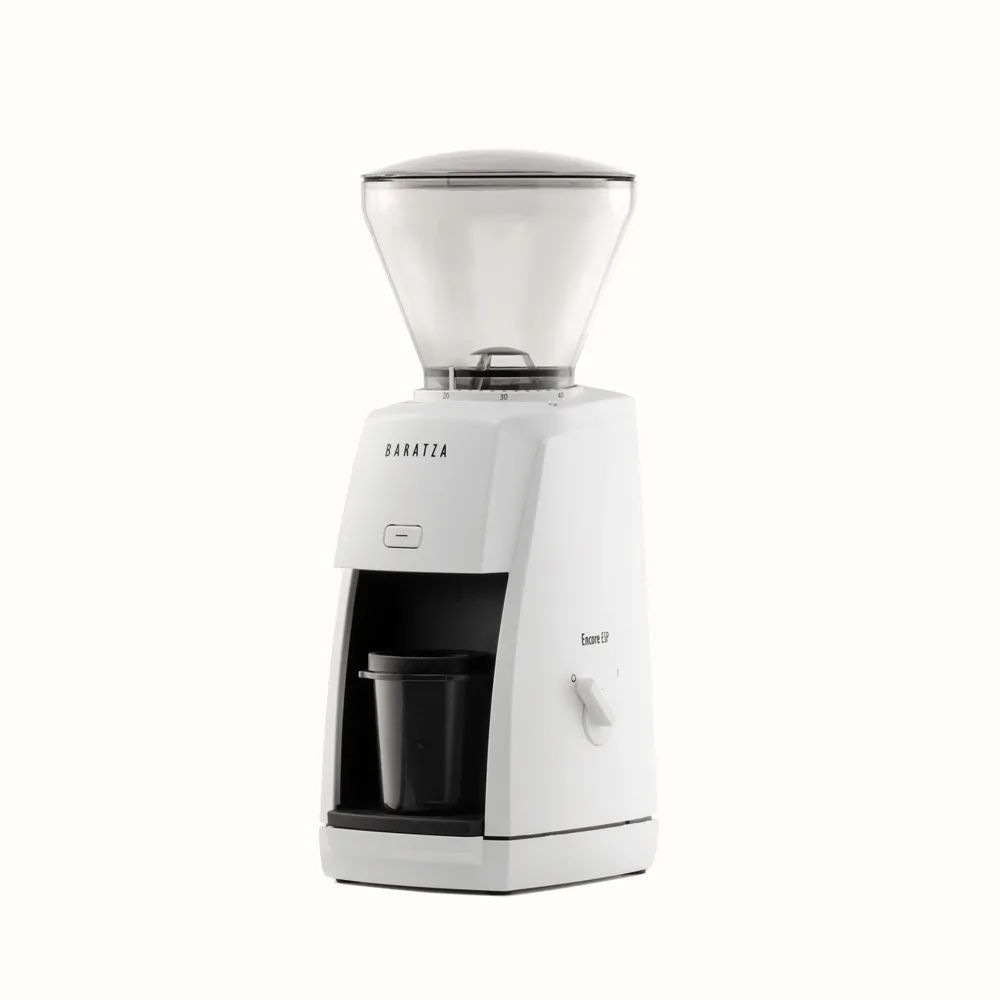
    Baratza Encore ESP grinder
    Product photo: manufacturer.

    When it really is the machine

    Fair is fair. Sometimes the machine is guilty. Breville’s troubleshooting table lists “machine needs to be descaled” as a cause when water won’t flow from the group head or there’s no steam. Coffee leaking around the portafilter usually means grounds on the basket rim or a portafilter not locked in properly. That’s a machine-side problem, but it’s not a buy-a-new-machine problem either.

    So the order of suspects goes like this:

    • Grind size and dose first. Change one thing at a time.
    • Bean age second. Breville suggests beans 5 to 20 days past the roast date.
    • Scale third. Descale per the manual. Our maintenance hub has the boring details.
    • The machine itself last. Way last.

    We may earn a commission if you buy through our links, at no extra cost to you. How that works.

    Basis: manufacturer specs and manuals, the references linked below, and price. We have not run this gear through our own testing, and we won’t pretend otherwise.

    Sources

  • Blade grinder vs burr grinder, told by someone who is tired of this argument.

    GRINDER TALK · AN OLD ARGUMENT

    Every few months someone asks if a blade grinder is fine for espresso. It is fine for cumin. It is fine for ending the conversation.

    Short answer: no. Long answer: still no, but with reasons. Here are the reasons, so you can send this link and go back to your day.

    What a blade grinder actually does

    A blade grinder is a tiny propeller in a cup. It doesn’t grind to a size. It whacks beans until you let go of the button. CoffeeReview described the spinning blade as acting “more like a hammer than a scalpel.” There’s no telling how many times any one chunk of bean gets hit, so each hit sends out another random spray of particle sizes.

    When CoffeeReview sent grounds to a lab for particle-size analysis, the popular blade grinder in the batch produced “the wildest variety of particles by far.” Their conclusion was a blanket recommendation against blade grinders for good coffee.

    Even the espresso machine makers agree. Gaggia’s Classic Pro instructions say it is “preferable to use a grinder mill rather than a blade mill because the latter releases too much coffee powder and produces an irregularly ground blend.” That’s the machine company telling you, in writing, that the blade grinder is the problem.

    A blade grinder doesn’t have a setting. It has a duration. Those are different things.

    What a burr grinder does instead

    A burr grinder feeds beans between two serrated surfaces, one spinning and one fixed. The gap between them sets the size. Turn the dial, the gap changes, the grind changes. Same setting tomorrow, roughly the same grind tomorrow. That repeatability is the whole point.

    Why does uniform size matter? Water pulls flavor out of small particles faster than big ones. CoffeeReview’s explanation is the clearest we’ve read: the closer your particles are to the same size, the easier it is to control the flow of water, and so the extraction. A blade grinder hands you dust and boulders in the same scoop. The dust over-extracts toward bitter. The boulders under-extract toward sour. You get both, in one cup, for free.

    Why espresso makes it worse

    Espresso pushes water through a tightly packed puck at about 9 bar. That’s what the Bambino Plus and the Gaggia Classic Pro (E24) both list. Breville’s own manual explains what happens at the extremes: too fine and the water won’t flow, too coarse and it gushes. Now imagine a grind that is too fine and too coarse at the same time. That’s a blade grinder’s whole personality.

    This is also why pressurized “dual wall” baskets exist. Breville says they regulate pressure regardless of grind and freshness. They can make a blade-ground or pre-ground shot look presentable. They can’t make it taste like a dialed-in one.

    The fair part

    Is a blade grinder useless? No. CoffeeReview says it’s still better than buying pre-ground coffee. If you make French press on a budget, fine. Live your life. We are only mean to blade grinders when they’re pointed at an espresso machine.

    If you already own one, don’t feel bad. Most of us started there. It was cheap, it was loud, and it got us into this mess. Just don’t build an espresso setup on top of it.

    The second argument, which we’re also tired of

    Then someone says, “OK, but conical or flat burrs?” CoffeeReview’s answer for affordable home grinders: the difference is “more theoretical than actual.” Neither shape wins by default at this price. Pick the grinder by whether it can do espresso well, not by the shape of its teeth.

    And note the trap: a burr grinder isn’t automatically an espresso grinder. It needs to reach a fine enough grind and step through that range in small increments. The Encore ESP gives half its 40 settings (1 to 20) to fine, small-step espresso grinding. The Sette 270 pairs macro steps with a stepless micro adjust. Those are designs built around espresso. A drip grinder with three “fine” clicks isn’t.

    Baratza Encore ESP grinder
    Product photo: manufacturer.

    We may earn a commission if you buy through our links, at no extra cost to you. How that works.

    Basis: manufacturer specs and manuals, the references linked below, and price. We have not run this gear through our own testing, and we won’t pretend otherwise.

    Sources

  • Single dose, explained without the sermon.

    GRINDER TALK · WORKFLOW

    Single dosing means weighing your beans before you grind them. That’s it. That’s the whole religion, minus the robes and the subreddit.

    You’ll see people talk about single dosing like it’s a lifestyle. It isn’t. It’s a workflow. Some people love it. Some people try it for a week and go back to a full hopper. Both are allowed.

    What it actually is

    Instead of keeping a hopper full of beans on top of the grinder, you weigh out one dose, say 18 grams, drop it in, and grind all of it. CoffeeReview describes it as loading and grinding just one dose at a time, for people who prefer to keep their beans in airtight containers and only expose what they’re about to use.

    That’s the entire definition. No special grinder required to start. A scale, a container, and a grinder that doesn’t hold on to your coffee.

    Why people bother

    • Freshness. Beans in a hopper sit in the open. Gaggia’s manual recommends storing coffee in an airtight container in a cool, dry place. Single dosing keeps the beans in that container until the moment you grind.
    • Switching coffees. Decaf in the afternoon, something fun on Sunday. With an empty grinder, swapping is just a different jar.
    • Knowing your dose. Beans in, grounds out, both weighed. Fewer mysteries when a shot goes sideways.

    Breville suggests beans are at their best 5 to 20 days after the roast date. If you go through a bag slowly, keeping it sealed instead of in a hopper is the point.

    Single dosing isn’t a personality. It’s a jar and a scale.

    The catch: what goes in should come out

    Single dosing only works as advertised if the grinder gives back what you put in. Grinders keep some grounds inside. That’s called retention, and CoffeeReview notes that stuck grounds can come loose later and mix with fresher coffee, “imparting off-flavors.” Weigh beans in and grounds out a few times and you’ll learn how your grinder behaves. We wrote a whole post on the hostage situation; it’s called Retention.

    Gear that helps (not required)

    Encore ESP. Baratza sells a Single Dose Hopper for the Encore, Encore ESP, and Virtuoso+. Baratza’s own Encore ESP page says it’s there to “optimize your grinder for a single-dosing workflow.” The hopper is sold separately; check current price. Details on our Encore ESP page.

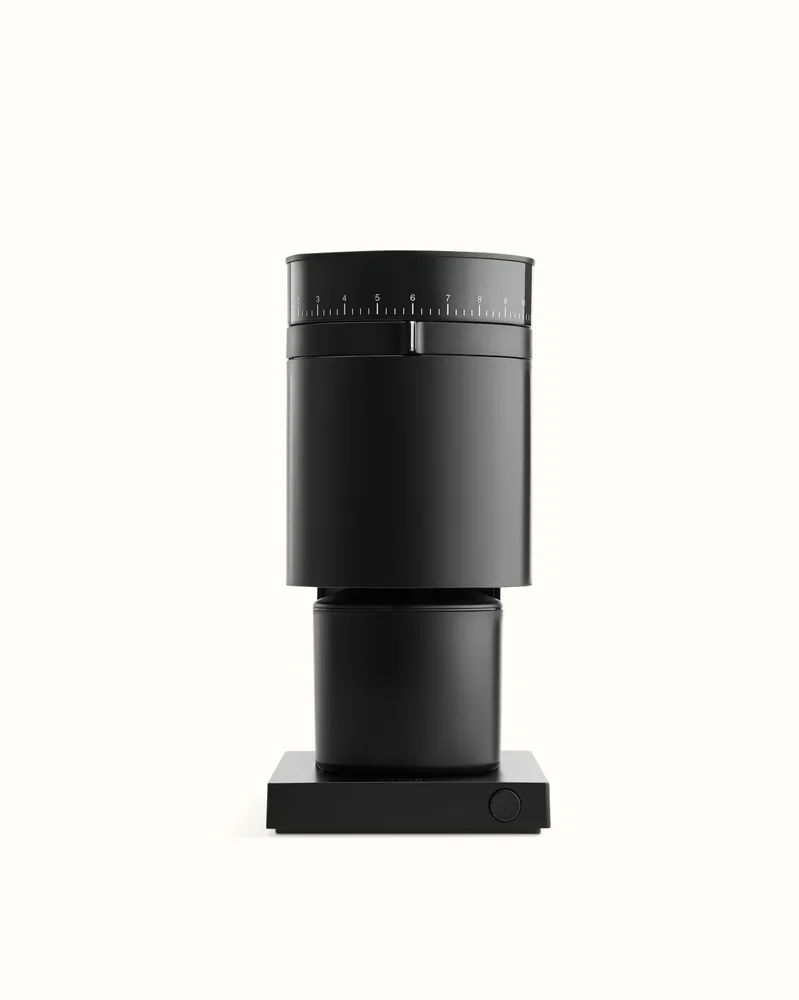
    Fellow Opus. The Opus line is built around loading one dose. Fellow’s current Opus 2 lists a 100 g single-dose load bin and claims “near-zero grind retention.” That’s Fellow’s claim, not our measurement. One honest caveat, which we repeat on the Fellow Opus page: it’s an all-purpose grinder that can reach espresso, not an espresso-first grinder.

    Fellow Opus conical burr grinder
    Product photo: manufacturer.

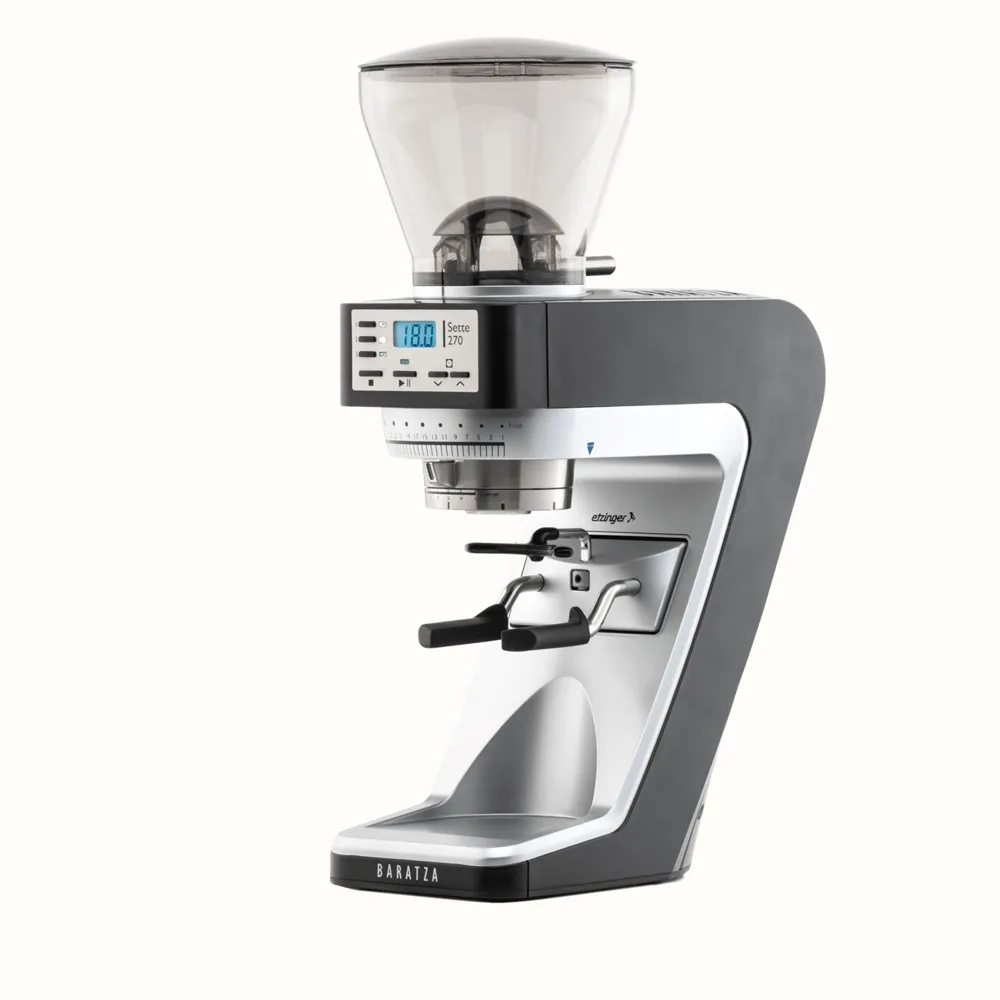
    Sette 270. The other approach. The Sette 270 keeps a hopper and doses by time, with a timer Baratza lists at 0.1 second resolution. Its hopper has a shut-off, so you can swap coffees without tipping the grinder over. Hopper people, this one’s yours. Check the timed dose against a scale now and then.

    What it won’t do

    Single dosing won’t fix a grinder that can’t reach espresso. It won’t make old beans fresh. It won’t dial in your shot for you. It’s bookkeeping, not magic. If the shot tastes wrong, grind size is still the main dial. Breville’s Bambino Plus booklet says a shot should start flowing after about 8 to 12 seconds. Faster usually means too coarse or too little coffee. Slower means too fine.

    It also won’t work without a scale. A 0.1 g coffee scale is the whole toolkit. CoffeeGeek’s Natia Simmons found her espresso doses were off by as much as 1 to 1.5 grams before she started weighing. That’s the kind of drift single dosing is supposed to catch.

    How to do it, start to finish

    • Weigh the beans. For a Bambino Plus double basket, Breville’s range is 16 to 19 g.
    • Grind the whole dose. Don’t stop early.
    • Weigh what came out. A small gap is retention or chaff. Note it.
    • Changed the grind setting? Purge a little first. Baratza’s Sette manual calls a 1 to 2 second purge “crucial in making sure all the ground coffee used is from the same setting.”
    • Pull the shot. Adjust grind, not dose, unless the dose was the problem.

    Who should skip it

    One person, one coffee, a bag gone in a week or two? A hopper is fine. Single dosing adds a step every morning, and the payoff is smallest when you never change beans. Nobody is grading you.

    Basis: manufacturer specs and manuals, the references linked below, and price. We have not run this gear through our own testing, and we won’t pretend otherwise.

    Sources

  • Retention: the gram of coffee your grinder keeps as a hostage.

    GRINDER TALK · HOSTAGE SITUATION

    Somewhere inside your grinder is coffee from Tuesday. It would like to be included in Thursday’s shot.

    That’s retention. Ground coffee that goes into the grinder and doesn’t come out with the rest. It sits in the burr chamber, the chute, the corners. Then one day it leaves, mixed into a dose that was supposed to be fresh.

    First, the fact that beats the joke

    The “gram” in our headline is a figure of speech. The grinder makers we cover don’t publish a retention figure in grams for the Encore ESP, the Sette 270, or the original Opus, and we don’t have a lab. Owner-reported numbers float around forums, but we haven’t seen them measured in a way we’d repeat. So: no number here. Just how it works and what to do about it.

    Why it matters

    CoffeeReview explains it well. Grounds stuck inside a grinder can come loose later and get swept out with fresher grounds, “imparting off-flavors and changing the character of your cup.” They can also lead to maintenance problems over time. Static makes it worse, because charged grounds cling to surfaces inside and out.

    Espresso doses are small. The Bambino Plus double basket is built for 16 to 19 g. Any old coffee that tags along is a bigger share of a small dose than it would be in a big batch of drip. And if you single dose, retention is the reason beans-in doesn’t always equal grounds-out.

    Retention isn’t a defect. It’s physics with a cleaning schedule.

    What the grinder makers do about it

    Encore ESPSette 270Opus 2
    Burrs40mm conical steel (M2)40mm conical (S1)48mm conical
    Design noteQuick-release burr for cleaningNo-chute design, grinds straight into portafilter or binInternal impeller; anti-static ionizer
    Maker’s retention wordingNone published“Less waste”“Near-zero grind retention”
    Specs and claims from manufacturer pages. Claims are theirs, not our measurements.

    Baratza says the Sette 270‘s no-chute design sends coffee “directly from the grind chamber into your portafilter or grounds bin.” Fewer places for grounds to hide. Fellow says the Opus 2’s impeller moves grounds through “without old grounds carrying over,” and lists “near-zero grind retention” as a headline feature. For the original Opus, Fellow’s FAQ says the anti-static works best for about 60 grinding cycles before the exit chute needs a quick brush.

    The Encore ESP doesn’t make a retention claim on Baratza’s page. It does make cleaning easy: the cone burr lifts out without tools.

    Baratza Sette 270 grinder
    Product photo: manufacturer.

    What you can do about it

    • Purge after changing the grind. Baratza’s Sette manual says to run 1 to 2 seconds more and toss it. That’s “crucial in making sure all the ground coffee used is from the same setting.”
    • Brush the burrs. The Encore ESP manual says about once a month if you grind daily. The Sette manual says every few months, with a stiff brush or cleaning tablets.
    • Never wash the burrs. Both Baratza manuals say water will rust them.
    • Go easy on oily and flavored beans. Baratza says built-up oils can make grounds stick and clog the grinder.
    • Weigh in, weigh out. A scale tells you how your grinder actually behaves. Retention is easier to manage once you can see it.

    Retention vs. static vs. a clog

    Different problems, same mess. Static is grounds jumping onto the counter and clinging to the catch cup. Retention is grounds staying inside. A clog is retention that got ambitious, usually from oily coffee or an overfilled bin backing up into the chute. Both Baratza manuals warn about that last one. Empty the bin before it hits the max line.

    One more habit: when you switch beans, run a little of the new coffee through and toss it. Whatever was left behind from the old bag goes with it. It costs a couple of grams. It buys you a shot that tastes like the coffee you just paid for.

    None of this means you need a new grinder. It means you need a brush, a habit, and maybe a couple of seconds of purge. Our maintenance hub covers burr cleaning and swaps in more detail.

    We may earn a commission if you buy through our links, at no extra cost to you. How that works.

    Basis: manufacturer specs and manuals, the references linked below, and price. We have not run this gear through our own testing, and we won’t pretend otherwise.

    Sources