GRINDER TALK · WORKFLOW
Single dosing means weighing your beans before you grind them. That’s it. That’s the whole religion, minus the robes and the subreddit.
You’ll see people talk about single dosing like it’s a lifestyle. It isn’t. It’s a workflow. Some people love it. Some people try it for a week and go back to a full hopper. Both are allowed.
What it actually is
Instead of keeping a hopper full of beans on top of the grinder, you weigh out one dose, say 18 grams, drop it in, and grind all of it. CoffeeReview describes it as loading and grinding just one dose at a time, for people who prefer to keep their beans in airtight containers and only expose what they’re about to use.
That’s the entire definition. No special grinder required to start. A scale, a container, and a grinder that doesn’t hold on to your coffee.
Why people bother
- Freshness. Beans in a hopper sit in the open. Gaggia’s manual recommends storing coffee in an airtight container in a cool, dry place. Single dosing keeps the beans in that container until the moment you grind.
- Switching coffees. Decaf in the afternoon, something fun on Sunday. With an empty grinder, swapping is just a different jar.
- Knowing your dose. Beans in, grounds out, both weighed. Fewer mysteries when a shot goes sideways.
Breville suggests beans are at their best 5 to 20 days after the roast date. If you go through a bag slowly, keeping it sealed instead of in a hopper is the point.
Single dosing isn’t a personality. It’s a jar and a scale.
The catch: what goes in should come out
Single dosing only works as advertised if the grinder gives back what you put in. Grinders keep some grounds inside. That’s called retention, and CoffeeReview notes that stuck grounds can come loose later and mix with fresher coffee, “imparting off-flavors.” Weigh beans in and grounds out a few times and you’ll learn how your grinder behaves. We wrote a whole post on the hostage situation; it’s called Retention.
Gear that helps (not required)
Encore ESP. Baratza sells a Single Dose Hopper for the Encore, Encore ESP, and Virtuoso+. Baratza’s own Encore ESP page says it’s there to “optimize your grinder for a single-dosing workflow.” The hopper is sold separately; check current price. Details on our Encore ESP page.
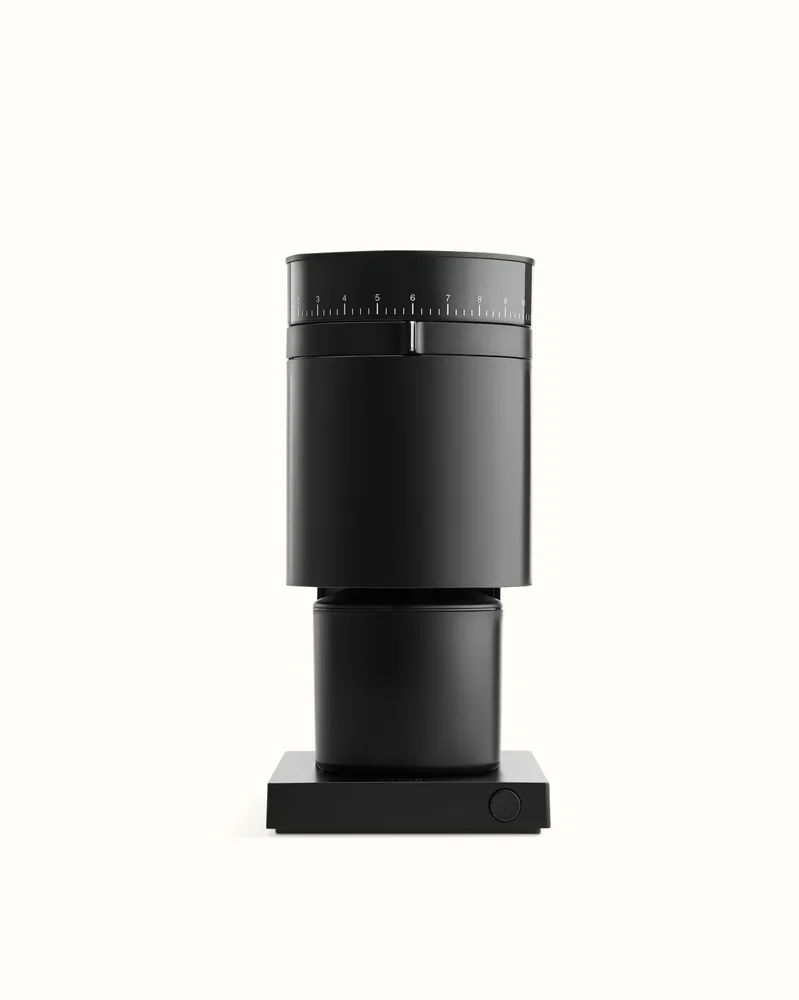
Fellow Opus. The Opus line is built around loading one dose. Fellow’s current Opus 2 lists a 100 g single-dose load bin and claims “near-zero grind retention.” That’s Fellow’s claim, not our measurement. One honest caveat, which we repeat on the Fellow Opus page: it’s an all-purpose grinder that can reach espresso, not an espresso-first grinder.
Sette 270. The other approach. The Sette 270 keeps a hopper and doses by time, with a timer Baratza lists at 0.1 second resolution. Its hopper has a shut-off, so you can swap coffees without tipping the grinder over. Hopper people, this one’s yours. Check the timed dose against a scale now and then.
What it won’t do
Single dosing won’t fix a grinder that can’t reach espresso. It won’t make old beans fresh. It won’t dial in your shot for you. It’s bookkeeping, not magic. If the shot tastes wrong, grind size is still the main dial. Breville’s Bambino Plus booklet says a shot should start flowing after about 8 to 12 seconds. Faster usually means too coarse or too little coffee. Slower means too fine.
It also won’t work without a scale. A 0.1 g coffee scale is the whole toolkit. CoffeeGeek’s Natia Simmons found her espresso doses were off by as much as 1 to 1.5 grams before she started weighing. That’s the kind of drift single dosing is supposed to catch.
How to do it, start to finish
- Weigh the beans. For a Bambino Plus double basket, Breville’s range is 16 to 19 g.
- Grind the whole dose. Don’t stop early.
- Weigh what came out. A small gap is retention or chaff. Note it.
- Changed the grind setting? Purge a little first. Baratza’s Sette manual calls a 1 to 2 second purge “crucial in making sure all the ground coffee used is from the same setting.”
- Pull the shot. Adjust grind, not dose, unless the dose was the problem.
Who should skip it
One person, one coffee, a bag gone in a week or two? A hopper is fine. Single dosing adds a step every morning, and the payoff is smallest when you never change beans. Nobody is grading you.
Basis: manufacturer specs and manuals, the references linked below, and price. We have not run this gear through our own testing, and we won’t pretend otherwise.
Sources
- CoffeeReview: Mid-range burr grinder equipment report (2020)
- Gaggia: Classic Pro operating instructions, US (PDF)
- Breville: Bambino Plus instruction booklet (PDF)
- CoffeeGeek: Want to Improve Coffee? Get a Scale (2024)
- Baratza: Encore ESP product page
- Baratza: Single Dose Hopper product page
- Fellow: Opus 2 product page
- Fellow: Opus gear guide and FAQ
- Baratza: Sette 270 product page
- Baratza: Sette 270 manual (PDF)
Leave a Reply