Category: Machines

  • The $650 starter stack that does not embarrass you.

    MACHINES · STARTER STACK · $600–750

    This is the stack for people who want real espresso and would also like to keep paying rent. Nothing in it needs an apology, a mod kit, or a forum account.

    Three things. A machine, a grinder that can actually do espresso, and a scale. That’s the whole list. Everything else is optional, and most of it is optional forever.

    We may earn a commission if you buy through our links, at no extra cost to you. How that works.

    The math, honestly

    The headline makes a promise, so let’s show our work, in price bands. The Bambino Plus falls in the $400–500 band. The Encore ESP sits around the $150–250 band. A decent 0.1 g scale is in the $15–50 band. Add them up and the stack lands roughly $600–750, depending on sales.

    So where does the headline number come from? Machine prices move. When we checked in October 2026, Breville’s own site had the Bambino Plus marked down below list. With the machine on sale, the stack lands in the lower part of that range, which is the target in our headline. Pay full price for everything and you’ll be near the top of it. Either way, check current price before you buy. Prices change faster than blog posts, and we’d rather tell you that than pretend.

    The headline is a target, not a promise carved in granite. Prices move. Check current price.

    Why this machine

    The Bambino Plus is small and quick. Breville says its ThermoJet heater is ready in 3 seconds. It uses a 54mm portafilter built for an 18 g dose, does a low-pressure pre-infusion, then extracts at 9 bar. The steam wand can texture milk automatically, with three temperatures and three texture levels, or you can take over and do it manually.

    The box also covers your day-one accessories: a 54mm tamper, the Razor dosing tool, a 16 fl oz (480 ml) milk jug, and both single wall and dual wall baskets. Fewer things to buy is a feature.

    Skip it if you want a 58mm portafilter and a machine you’ll tinker with for years. That’s the Gaggia Classic Pro (E24) lane, and it costs more once you add a grinder. See our Gaggia pairing.
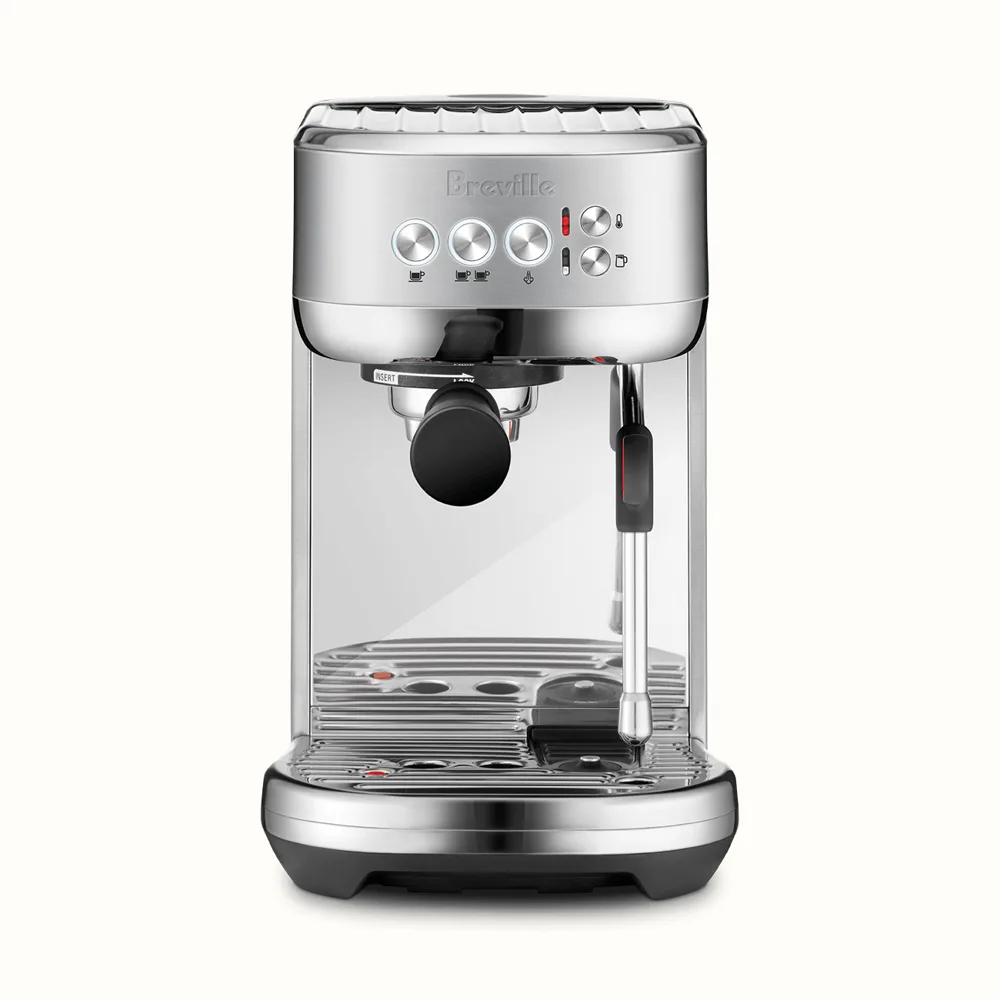
    Breville Bambino Plus espresso machine
    Product photo: manufacturer.

    Why this grinder

    The Encore ESP uses 40mm steel conical burrs and splits its dial in two. Settings 1 to 20 are small-step espresso settings. Settings 21 to 40 are for filter coffee, so it can still make your weekend pour-over. Baratza includes a dosing cup that fits 54mm portafilters, which happens to be exactly what the Bambino Plus uses, plus a 58mm adapter if you upgrade later. The burr pops out without tools for cleaning.

    This is the part of the budget we’d defend hardest. Based on specs, owner reports, and price, a grinder that can make small espresso adjustments matters more than anything the machine does. That’s our whole site, really. Grinder first.
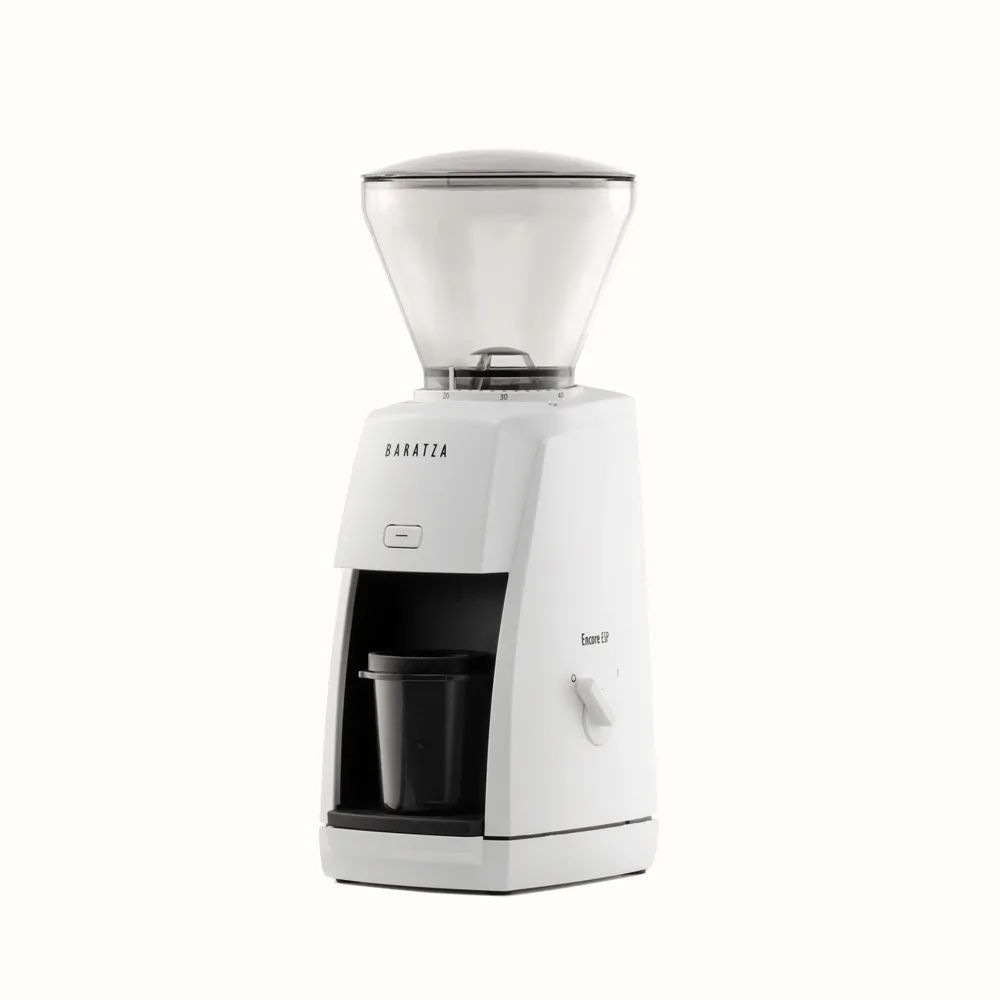
    Baratza Encore ESP grinder
    Product photo: manufacturer.

    Why a scale

    Espresso recipes are written in grams. Breville sizes the Bambino’s double basket for 16 to 19 g. Eyeballing that range is how you end up chasing ghosts.

    CoffeeGeek’s Natia Simmons wrote that before she got a 0.1 g scale, her espresso doses were off by as much as 1 to 1.5 grams, and that a cheap scale improved her espresso more than almost anything else besides a good grinder. You don’t need a fancy one. A basic 0.1 g scale that fits on the drip tray will do. Here’s an Amazon search for 0.1 g espresso scales.

    What we left out on purpose

    • A knock box, a WDT tool, a bottomless portafilter. Nice later. See the accessories hub when you’re ready.
    • A second tamper or milk jug. The machine already came with one of each.
    • A milk thermometer. In auto mode the Bambino Plus lets you pick from three milk temperatures.

    Two other ways to spend about the same money

    One box instead of two. The Breville Barista Express has a built-in conical burr grinder with 16 settings. It sits in the $500–700 band, depending on sales; check current price. It’s tidy and it saves counter space. The tradeoff is that the grinder lives inside the machine. We walk through it in Barista Express vs a separate grinder.

    The 58mm route. The Gaggia Classic Pro (E24) sits in the $400–600 band; check current price. Add a real espresso grinder and you’re well past the headline number. It’s a different, more manual machine for a different person. Details in the Gaggia pairing.

    Basis: manufacturer specs and manuals, the references linked below, and price. We have not run this gear through our own testing, and we won’t pretend otherwise.

    Sources

  • What ‘espresso-capable’ means when a brand is stretching it.

    MACHINES · READING THE BOX

    “Espresso-capable” is doing the same job as “beach-adjacent.” Technically true. Bring shoes.

    The phrase shows up on grinders and machines alike. Sometimes it’s honest and useful. Sometimes it means “we tried it once and nothing caught fire.” Here’s how to tell which one you’re looking at, using nothing but what the manufacturers themselves publish.

    First, the fair part

    The label isn’t always a stretch. Fellow’s grinder comparison page puts a literal “Espresso capable” checkmark next to the Opus 2, and in the same breath says its Ode Gen 2 doesn’t “grind fine enough for espresso.” That’s a brand drawing a clear line between its own products. Good. More of that, please.

    The problem is what a checkmark can’t tell you. “Capable” answers “can it get there?” It doesn’t answer “how well does it behave once it’s there?” For espresso, the second question is the one you’ll live with every morning.

    Grinders: three questions the label skips

    1. Does it reach true espresso fineness?

    This is the bare minimum, and the part the label covers. Fine. Next.

    2. How big are the steps in the espresso range?

    Espresso is fussy. Small grind changes make big flavor changes. Fellow says it outright: stepless adjustment “matters most for espresso, where small grind changes have an outsized effect on extraction.”

    Look at how grinders spend their dial. The Encore ESP gives half of its 40 settings, 1 to 20, to espresso, and Baratza’s manual says each of those clicks changes the grind “by small amounts.” The filter settings, 21 to 40, take bigger jumps. The Sette 270 uses macro steps plus a stepless micro adjust. The original Fellow Opus took another approach: its outer ring spans the whole range, espresso to cold brew, across 41 settings, with an inner ring for micro adjustments. Fellow says the Opus can grind “the finest espresso for a true 9-bar shot.” We believe it can get there. Getting there and dialing in comfortably are different jobs.

    3. Is espresso its main job, or a side gig?

    CoffeeReview, writing about burr grinders in roughly the $200–270 MSRP class, said they “tend to perform best for brewed coffee,” that some can be used for espresso, and that “a specialized espresso grinder is generally best.” That’s our position too. An all-rounder that can reach espresso is a fine buy for a household that mostly brews filter coffee. If espresso is the point, buy a grinder designed around it.

    “Capable” tells you it can reach the trailhead. It doesn’t tell you whether it can hike.

    Machines: the bar number on the box

    Machine boxes love a big pressure number. Here’s what the spec sheets actually say. Breville lists a 15 bar pump on the Bambino Plus and the Barista Express, delivering a 9 bar extraction after pre-infusion. Gaggia lists a 15 bar Ulka pump on the Classic Pro (E24), with its pressure valve calibrated to 9 bar.

    So the bigger number is what the pump can do. The smaller number is what the coffee sees. Both of those companies brew at 9. If a box only brags about pump bars and never mentions brew pressure, that’s not proof of anything bad. It’s just not telling you the number that matters.

    The pressurized basket: espresso-capable, with an asterisk

    Many starter machines ship pressurized baskets. Breville calls its version dual wall and says it regulates pressure to help extraction “regardless of the grind, dose and tamp pressure or freshness.” Gaggia ships a “crema perfetta” filter and recommends starting there before moving to the traditional one.

    Pressurized baskets are useful for pre-ground coffee. They also lower the bar for everything else. Fellow’s Opus 2 FAQ notes that pressurized baskets typically need a coarser grind. So a grinder can be “espresso-capable” mainly in the sense that it can feed a pressurized basket. Ask whether it can feed a regular one.

    Credit where due: the Breville and Gaggia machines we cover ship non-pressurized baskets too. Use them once your grinder can keep up.

    A five-second checklist for any “espresso-capable” claim

    • Grinder: how many settings live in the espresso range, and is there a micro or stepless adjust?
    • Grinder: does the maker call espresso its main job, or one of six jobs?
    • Machine: what’s the brew pressure, not just the pump rating?
    • Machine: does it ship a regular (single wall) basket, or only pressurized ones?
    • Both: what does the manual say? Manuals are less excited than marketing.

    Basis: manufacturer specs and manuals, the references linked below, and price. We have not run this gear through our own testing, and we won’t pretend otherwise.

    Sources